Table Of Content
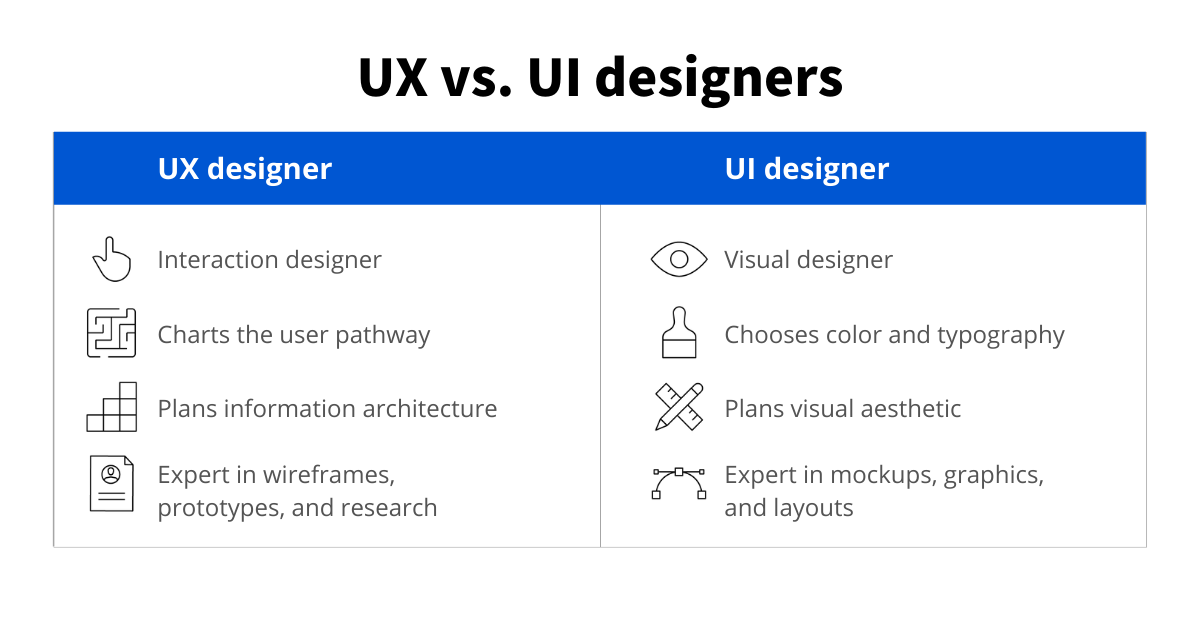
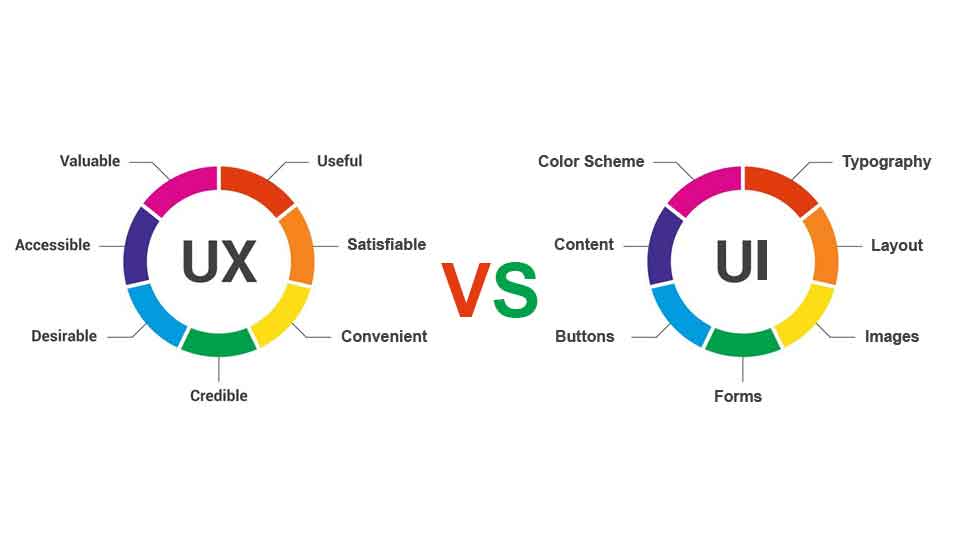
While there is overlap between UX and UI designers, there are various distinct skills, tasks, and responsibilities for each role. Which tasks and skills you ultimately perform boil down to the job's specific requirements. Whether you become a UX or UI designer, you can expect similar remuneration. If you’re serious about pursuing a career in this exciting field, there are many free resources to get you on your way. "UI" is short for "User Interface." UI focuses on the screens, icons, buttons, visual elements, and interfaces in a user experience.
The collaboration between UX and UI designer
UX design usually comes first during the initial software development stage. Then UI designers work closely with the UX designer when it comes to things like color, typography, responsive design, buttons, icons, and similar features of the product. Lots of people new to the world of design and development struggle to understand the differences between UX and UI, so they just lump all of the visual elements of their design into a single category.
Step 1: Define Project and Scope
UI designers are often tasked with creating products or entities that are aesthetically consistent with an overarching brand. UX and UI designers might work on the same product, but they have different duties and goals. UX designers often create wireframes and testable prototypes that form the basis of a website or service’s user flow, while UI designers finalize products and designs that drive user engagement. Once the user flows have been determined, the designer knows what steps the user needs to take to complete their desired tasks. They will visually brainstorm solutions for each of these steps, creating wireframes and prototypes of what the final product might look like. They build a user interface by leveraging key elements that improve the user's interaction with the product.
What Does A UI Designer Do? UI Design Skills Definition and Examples
Well, to be honest, the UX unicorn isn’t something most people can realistically strive towards. It simply takes too much time to be proficient in UX design and front-end coding. This is the sort of phenomenon that comes from, for instance, having been an active hobbyist for years.
UX designers also tend to design user scenarios — different paths users can take when using a product. What should the experience look like if the user uses the wrong password? What are the options if a user mistakenly adds an incorrect item to the basket or invites the wrong person to the shared file? Usually, many stakeholders participate in deciding on the final solution. The role of a UX designer in this process is to represent user needs and ensure the company doesn’t choose a solution that is healthy for the business but harmful to the user.
The job of each UX designer is to optimize your digital experience to keep you coming back to the product. After conducting research and analysis, UX designers will sketch wireframes to illustrate elements, content, and user interactions. They’ll then create prototypes from wireframes by adding functional information architecture. UX designers focus on creating a product’s structure, flow, and functionality. First and foremost, they work closely with marketers, business analysts, and product teams to understand user needs.

UI, in contrast, refers to the elements that make up the interface, such as buttons, lists, and text fields. It emphasizes the ease of interaction to enhance the user's journey charted by UX. No matter what challenges you face as a digital designer, you've got the tools you need to flex and improve your UI and UX designs with Figma.
Internal processes and systems
First, ensure consistent user involvement throughout the design process. Conduct regular testing sessions and gather feedback to understand user needs and preferences. This approach helps you design solutions that truly resonate with the target audience.
How to decide between Dark Mode and Light Mode for UX design - Fast Company
How to decide between Dark Mode and Light Mode for UX design.
Posted: Wed, 04 Oct 2023 07:00:00 GMT [source]
This type of unity is achieved when all parts of the design support a common message or concept, making the overall purpose of the design clear to the viewer. Because of their conjoined nature, UI/UX educational programs are often paired together. Few universities offer straight-up degrees focused on UI/UX, but you are likely to find courses relevant to the field within marketing, communication, or computer science departments. Implementation on the hand focuses on putting design choices into action such, as selecting fonts, colors and layouts.
They ensure that every design decision supports the product's goals and delivers real value to users. UX design process steps include rigorous usability testing and feedback loops that help refine the product iteratively. This ensures that the final version meets user needs effectively and reduces the likelihood of failure post-launch. UX/UI design helps reduce user errors by making products more intuitive and straightforward. UX designers uncover common UX issues during research and testing, allowing UI designers to find ways to eliminate these problems.
While UI design considers user wants, they integrate these needs with an artistic and branding perspective. The end-to-end user experience—the UX—is the sequence of UI screens. The first and most crucial step is to equip yourself with UX or UI design knowledge.
This close examination of users as they move through their user flows and journeys helps expose accurate scenarios and problem statements. Teams then can use these as a compass to guide the design of solutions that are not only aesthetically pleasing but also functional and easy to use. If you’re looking to become a multiskilled designer who can handle the product design process from start to finish, you might want to learn both UX and UI.
Now, you can not only identify the song, but you can also store that song for future reference. Shazam connects to music streaming apps like Apple Music or Spotify and creates a playlist of all the tracks you have ‘Shazamed.’ The UI is simple and clean because that’s what the user requires. Involves designing the tangible elements of the experience, such as the choice of elements and how they interact. All of your work on Figma will be autosaved online, so you can access it from anywhere you have internet access.
However, unlike UX which is broad and all-encompassing, UI concentrates on the design and layout of digital screens, as well as the individual elements they contain. This includes things like buttons, swipe and scroll motions, menus, typography, imagery, colours, animations and the transition from one screen to the next. If you’re interested in technology, thrive on variety, and love to solve problems, user experience design might be a good fit. If you’re a creative thinker with a strong aesthetic sense, consider pursuing user interface design. Detail the purpose, goals, and target audience of your design project. Then, specify any necessary elements or constraints, such as branding guidelines, budget limits, or timelines.
In other words, UX design is concerned with the overall user-friendliness of an entire customer journey. And because UX has such a rich history, there’s some debate over where it starts and ends. It also gives you a sense of how the collaboration works, with UX designers handing their work and recommendations over to the UI team once core concepts are tried and tested. Maze is a research platform that generates high-impact user insights in order to shape better product experiences. Combine the UX Diploma with the UI Certificate to pursue a career as a product designer.




No comments:
Post a Comment